Jonathan Sumption on juries, Islamophobia, Israel and the limits of power
A sold-out Richmond Theatre evening on law, democracy and why Britain still gets rid of bad leaders.


It’s a perk of my job that the people I’m paid to interview are also the people I’d also pay to see. I interviewed Jonathan Sumption for The Times this time last year and bought five tickets to see him at Richmond Theatre this evening, accompanied by my younger son and his schoolfriends. I saw other parents there, teenagers - and sometimes grandparents - in tow. It’s an unusual lawyer who can rivet three generations, but Lord Sumption has always been unusual. Perhaps, in an era not overflowing with political talent, people hunger for a better quality of argument. And it falls to a former Supreme Court justice to provide it. His defence of David Lammy’s jury reform, for example, is better than any case Lammy has made. Here’s a selection of his views on various topics that came up:-
1. The problem with juries
“The jury system has merits and demerits, but neither have anything to do with democracy. We need a jury system for the sole reason that public support for the criminal justice system is absolutely fundamental. The public do support juries, but I think the public is not often aware of the very high price we pay for jury trials. Not financially, but in terms of justice.
Morally, I find it hard to justify a situation in which somebody can be sent to prison by a tribunal that doesn’t have to give its reasons. But not giving reasons is a more fundamental problem, because we can’t have a proper appeal system. Judges are perfectly capable of cocking up criminal cases, but the errors of judges are correctable on appeal. They’re transparent. We know what their reasons are, and if they don’t stack up, we can change them. The problem about jury trials is that because we don’t know the jury’s reasons. The jury can’t be expected to give reasons - they have twelve different reasons - they give a verdict for reasons which we don’t know. So the appeal process is, often, a travesty.
For as long as the public supports juries with the strength of feeling that they do, I think we must keep them. I think that the jury system is a very unsatisfactory system, and as one member of the public, I would like to see it brought to an end. But my fellow citizens disagree with me - that’s good enough for me.
What David Lammy is advocating is something between the two. There’s always been a large class of criminal charges which are not triable by juries, and there still is. There’s always been a boundary, which has moved from time to time, between cases that are triable by jury and cases that aren’t. David Lammy is proposing to shift the boundary. I don’t think that is a great constitutional issue. The Leveson inquiry, which reported eighteen months ago, proposed something very similar. The fact is that it is a gross injustice for cases to take five years plus to come to trial. That is a bigger injustice than limiting trials by jury to the most serious offences.”
2. Why Donald Trump’s version of history is wrong
A few days ago, there was a very interesting and widely-reported interview which Trump gave to reporters on the New York Times. He was asked, ‘What restraints do you recognise in your conduct of international relations?’ And he said, ‘None, except for my own moral conscience.’ That theme was echoed very shortly afterwards by the Deputy Chief of Staff, Stephen Miller, who said that ‘we live in a world… governed by strength, governed by force, governed by power - and these are the iron laws of the world.’
‘Judging by that remark, Stephen Miller is an exceptionally bad historian. The rules-based international order has made life safer for Americans since the Second World War - certainly safer than it will be in a world where most other countries fear and loathe the United States, which is the direction in which I’m afraid things are heading. But he’s also wrong in a more fundamental respect, which is that international predators normally unite large parts of the world against them, and for that reason they normally fail. He’s wrong for the additional reason that there are limits to what even the greatest military powers can achieve by military means alone.
‘One of the wisest people ever to control the State Department (and certainly one of the most historically aware) was Henry Kissinger. He certainly had no compunction about the use of force where it was productive. But the striking thing about him is that many of his greatest achievements were retreats - opening China and so on - because he had an instinctive understanding of the limits of military power. Military power failed in Vietnam. It failed in Iraq. It failed in Afghanistan. There are lessons to be learned from that’.
3. Why Britain should pull out of the ECHR
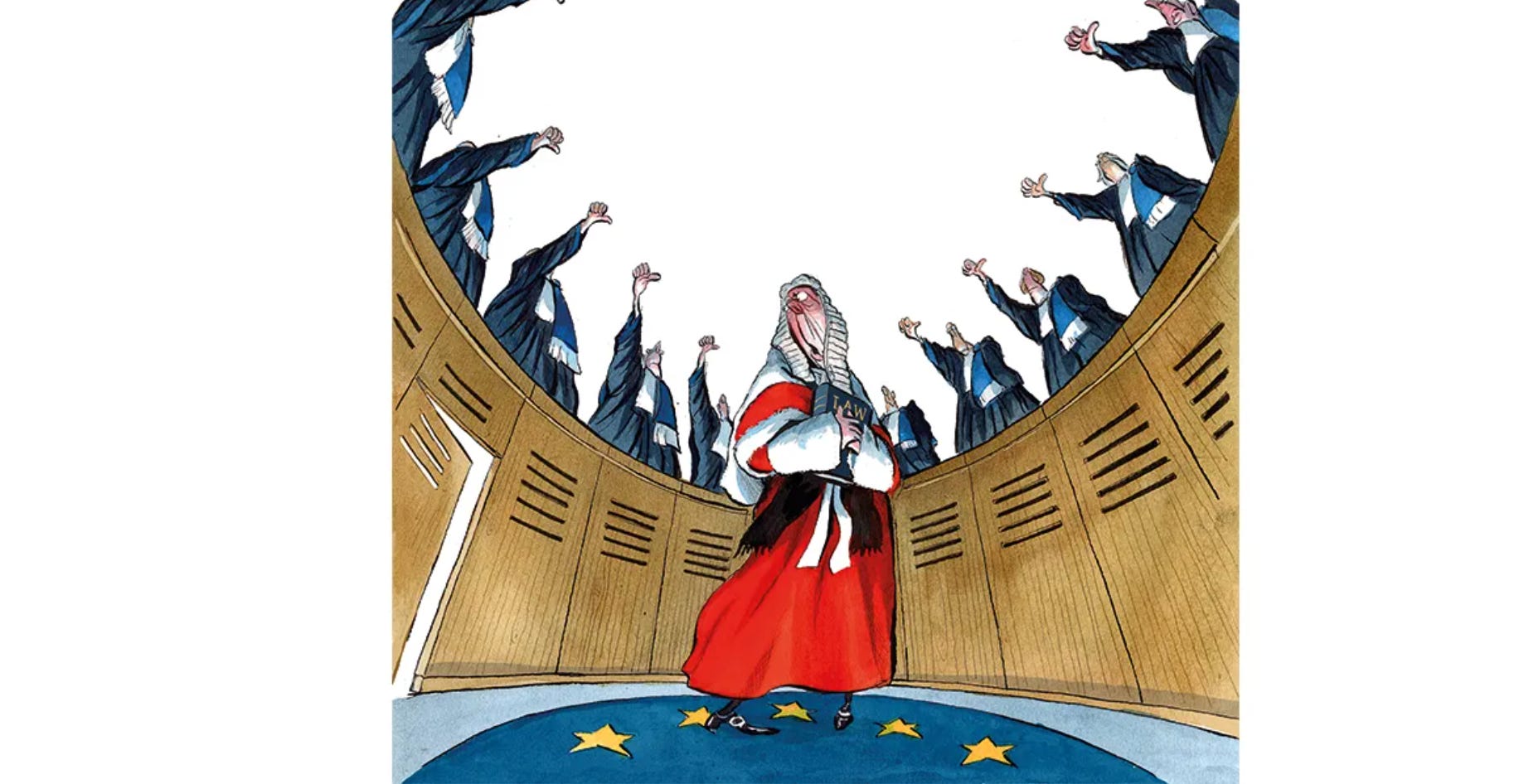
“A case [brought to the ECHR] implied a right to have your government achieve net zero on carbon emmissions by 2050. Now, I happen to believe that it’s a good idea to achieve net zero. But I think it’s completely outrageous that this should be stated to be a human right and decided in that particular way.
The reason why Switzerland had failed - in the view of the Strasbourg Court - to have legislation in place was that after the legislation expired, they passed new legislation which submitted in accordance with the Swiss constitution to a referendum. Which threw it out. Two years later, the electorate approved another, somewhat modified version.
Confronted with the argument that democracy surely required heeding the decision of the Swiss electorate, they said: ‘Oh, but democracy isn’t about counting votes’ - (it is, actually) - ‘it is about the rule of law.’ Now, what they meant by ‘the rule of law’ is the rule that they just made up 20 paragraphs earlier!”
4. The case against studying law at A-Level
‘I’ve made enemies in most law departments at universities up and down the land by trying to persuade people not to read law at university. And that applies in spades to people who want to do law A-level! The thought of somebody being primarily concerned with mainly law from their 18th birthday is a very dismal thought!
In North America, law is a second degree. Quite right. In order to practise law sensibly and effectively - and certainly in order to practise enjoyably - you need a cultural hinterland. You need to know something of history, particularly in Britain, which has a system of customary law where history is a vital part of it. But there’s much more to it than history, much more to it than law. If you only know about law, you’re likely to be a lesser practitioner - as well as having a very boring time’.
5. The case against outlawing ‘Islamophobia’
‘Minorities must be protected against violence, but I would not accept that minorities can properly be protected against intellectual objections. The classic example of this is what’s loosely called ‘Islamophobia’. I see absolutely no reason why people should not criticise - indeed, ridicule - the beliefs of some religious denominations, including Islam. Christians have had to put up with this for long enough - and rightly so! I think that we need to get a bit more thick-skinned about this. Racial hatred - in the sense of things that are not conflicts of ideas but are basically invitations to prejudice in the award of, for example, jobs, or invitations to violence - are completely objectionable and are abuses of free speech. But that, I think, is as far as it goes’.
6. Why Britain’s constitution works when it comes to ejecting bad Prime Ministers.
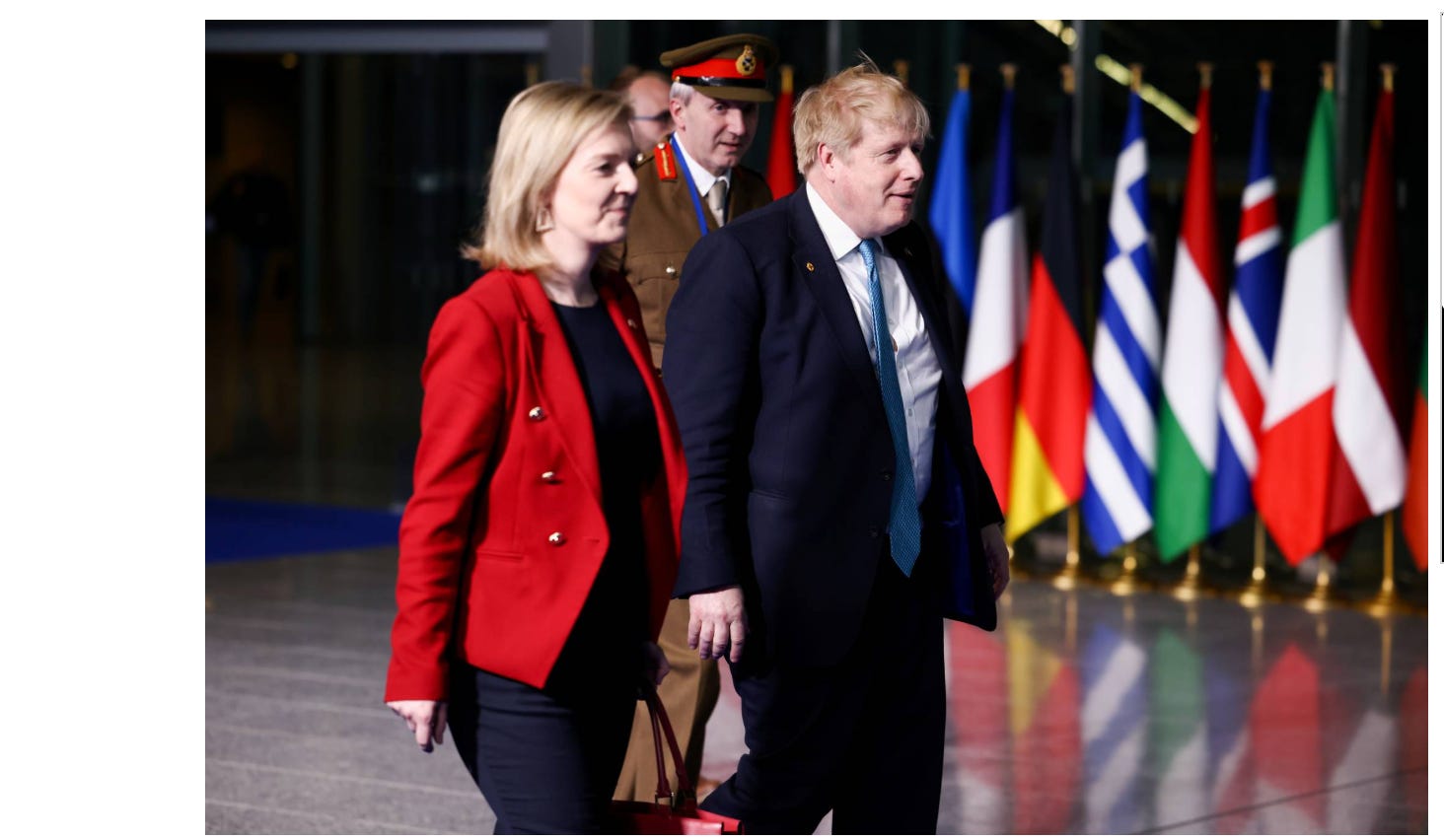
‘No constitution can guarantee that unsatisfactory people will not become prime minister. We have recent experience to suggest that our constitution is very good at getting rid of prime ministers when their inadequacy becomes apparent. The point about a parliamentary system is that it’s much better at dispersing power.
If you want to behave like Donald Trump in the UK then it’s not impossible, but you have to carry a lot more people with you. Boris Johnson made an overt claim to presidential status in the last days before he disappeared. He said, ‘This is my mandate - I got it in December 2019, it’s an impertinence for you MPs to get rid of me.’ Well, the sequel showed that’s not how our constitution works. Essentially, the constitution worked absolutely as it should do with him - and with Liz Truss six weeks later - because basically the system spat out people who had been foisted on the governing party by constituency associations but were not suitable people to be prime minister. The Americans have not been so fortunate.’
7. On US vs UK Judicial Independence
“The judiciary in the UK is more robust as an institution than that in the United States, as a result of its political independence. It’s primarily a question of the process of appointment, which in the United States is solely in the hands of the President.
The government appointed judges in this country until 2005. It worked in practice because the Lord Chancellors were genuinely apolitical in their appointments. They may have been Tories, Conservatives, socialists or whatever - but they approached the process of judicial appointments in a neutral way. It is a striking fact that the only avowed Marxist ever appointed to the High Court bench was appointed by Quintin Hogg, a Conservative.
By 2005, when the system changed, I think the danger of political appointments to the judicial bench was increased. But more important still, the danger was that people would perceive that judges were being appointed for political reasons. Therefore I thought it was essential to the reputation of the judiciary that the system should change.
Currently, judges are appointed by an entirely-apolitical Judicial Appointments Commission. I was a member for the first six years of its existence. It does go about things completely fairly. We don’t actually know the political views of candidates for judicial appointment, and if they were keen to make their political views known, we would probably have taken the view that that was a reason for not appointing them.
The position is completely different in the United States. A survey by the New York Times last week indicated that in the United States, Trump appointees agree with Trump in 92pc of all cases that came before them in 2025. That’s a pretty remarkable statistic. I don’t think we suffer from anything remotely resembling that.”
8. On Israel, war crimes and genocide..
The case that Israel has committed war crimes is, I think, very clear. The Geneva Conventions absolutely prohibit attacks on civilian facilities like hospitals. It is not an excuse to say that there are tunnels underneath. That would be obvious if, instead of talking about bombs falling through the sky, one talked about tanks firing artillery into a hospital on the ground and there was some installation on the other side of it. It seems perfectly clear that the deliberate attacks on water processing facilities, hospitals and other civilian facilities were contrary to the Geneva Conventions.
The most important rule of international humanitarian law is that military operations have to be proportionate to the results sought to be achieved. Israel says that means they can define their military objectives, and they are entitled to commit as much violence as is necessary to achieve those objectives. That is not international law. International law is that if there are military objectives that you can only achieve by causing disproportionate casualties among civilians, you can’t pursue them at all. All these principles are contained in Israel’s own military manuals, and all of them have been egregiously broken.
Genocide is a very much more difficult and contentious issue, and I’d be the first to admit that my own views on it are very much contestable and open to debate. Genocide is defined in the convention as the elimination of all or part of an ethnic or religious group, and it is rightly difficult to prove. The reason why normally genocide allegations fail is that they are normally inferences drawn from the operations themselves.
This case is different. We have numerous statements from the President and Prime Minister of Israel downwards to the effect that the object of the enormous scale of the operations against civilians in Gaza - and most of the victims have been civilians, by a large margin - was due to the desire to persuade as many Gazans as possible to leave the territory for third countries, by starving and bombing them if they remained behind. I think that is genocidal. Not everybody agrees, but it seems to me that the scale of the destruction - 92pc of domestic residences in Gaza rendered either totally destroyed or uninhabitable - is not capable of being explained by purely military objectives. It is actually explained by the desire to get rid of the Gazans. As a lawyer, I find it very difficult to justify that.”
9. And on Hong Kong
And when asked to sum up his time in Hong Kong, he had a moving reply:-
“I think Hong Kong is a known tragedy. A vibrant and diverse political society - in those respects very unlike mainland China. Hong Kong, when the British arrived, was a virtually uninhabited island, and it has been created essentially in the image of aspects of the polity of the United Kingdom. It’s got nothing in common with mainland China other than the ethnicity of its population. Its legal, educational and cultural background are completely different. I think that it is a tragedy to find, politically - not in other respects, but politically - this vibrant society brought into conformity by a regime which treats individual human beings as instruments of state power.”
10. And on democracy
“I don’t feel optimistic that democracy can revive and thrive. I think that the emotions which are undermining democracy - the emotions which I’ve summed up in the inadequate word ‘polarisation’ - are too natural to human beings for us to see the end of it anytime soon. I very much hope that I’m wrong, but it seems to me important that a pessimistic message, which I genuinely believe in, should be conveyed - because we’re not likely to do anything about it until we realise the extent of the problem.
In the very long term, I suspect that we will go through a period of highly authoritarian government which we will find repellent, and that will propel us back to, in some respects, a more civilised state. But we’re talking about the very long term indeed.”
He ended the evening on this rather gloomy note. But I left thinking that in a country where a judge can fill out a Middlesex theatre on a Sunday evening discussing law and politics - with the generational mix similar to a panto - suggests our democracy can’t be in too bad a shape.
Sumption's strength is a non-tribal approach to issue resolved for too many people by the narrative peddled by their current political icons of choice. That is a strength of Nelson's approach too.
Thanks for the write up. His argument against juries was certainly not one I’d heard before.