Notes from Monticello
A visit to Jefferson’s home offered an answer to the sectarian madness unfolding in London

I’ve long wanted to visit Monticello, the estate built by Thomas Jefferson, where he escaped to and where he spent his post-presidential life. My excuse was an invitation from the Aspen Institute in Washington DC who held a column I wrote for The Times: Beware the politician bearing a Cross. I was warning about the dangers when politics and faith merge: the new sectarianism seen by the Muslim independents and, increasingly, by Christian nationalists. My plan was to do the DC discussion on Monday then spend the rest of the week in Charlottesville, from where Jefferson’s estate is a ten-minute cab journey. It was indulgence. But I wanted to go on all of its tours. I didn’t expect I’d find there the answer to questions raised not just in my event in DC but also by what’s now unfolding in London.
The new ‘civilisationalism’
Faith and politics is mixed all too much on Tommy Robinson’s Unite the Kingdom march yesterday. Most protests hand out placards. This one had a pile of wooden crucifixes for people to pick up, reinforcing its new theme of a war for Christian civilisation. This was a minority theme foisted on those present who, from all evidence, seem to be ordinary people marching in support of their country rather than against anyone. But many of the organisers want to change that, and have an agenda to sell: from Christian nationalism to all-out anti-Islam. Hence the massive pile of crosses and scenes like this…
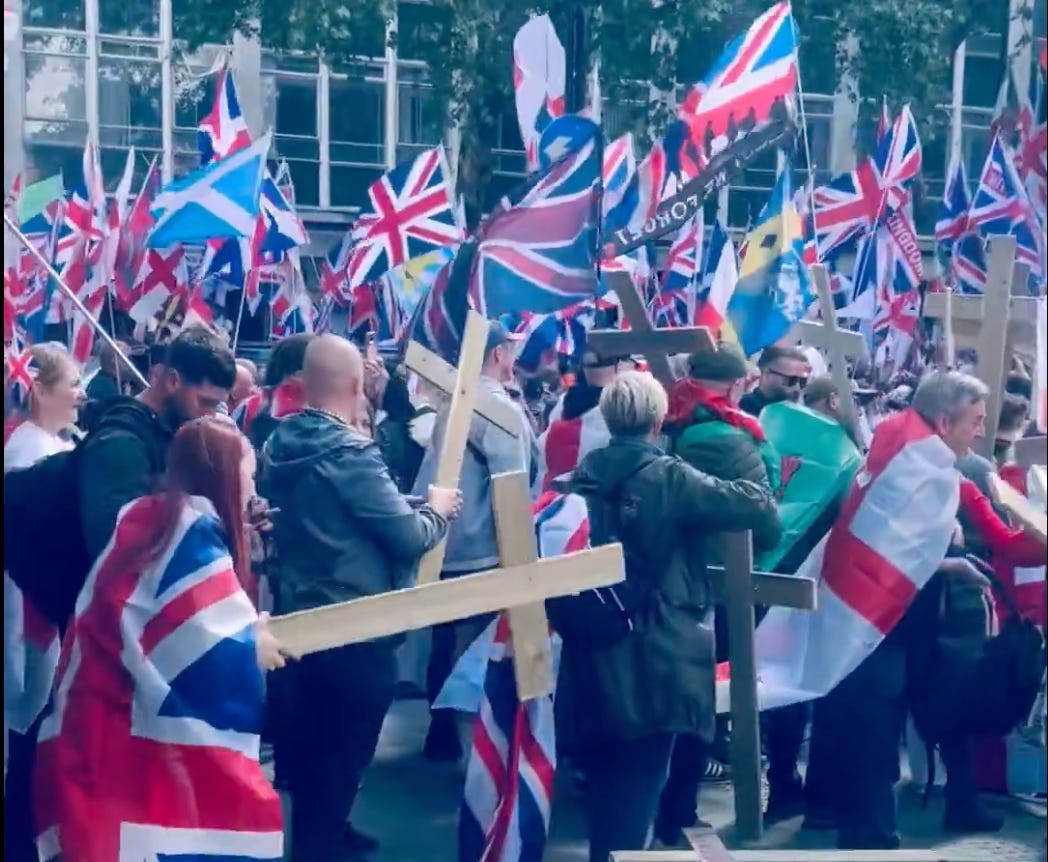
This ‘Christian civilisation under attack’ theme is popular in America too: so much so that, Robinson told the crowd, the event had been bankrolled by a big US donor (he asked them to shout ‘USA, USA’ in appreciation.) A new spectre is haunting Europe: the spectre of ‘civilisationalism’ - and it’s now going on both sides of the Atlantic. This is a big MAGA theme and the latest US National Security strategy talks about Europe facing “civilisational erasure”. Christian norms are being attacked by an influx mostly Muslim fifth columnists, the argument goes, who erase our culture and values. (This iteration of the Robinson projects accepts black Brits in the ‘this is a Christian country’ theme). A globalist elite is ushering this on, set to imprison ordinary citizens who protest. But ordinary souls can rise up to protect their women, children and Christian culture. Barbarians are inside the gates.
It’s tempting to laugh this off as bizarre (the Robinson march even assembled women in niqabs for the audience to boo at). But we can see versions of this theme filter down politics: to dismiss this as a far-right, racist march is to miss its point. Its the leaders and speakers, not the attendees, who you need to keep an eye on. You’ll struggle to find a hard-right provocateur who has not ‘converted’, picked up the cross - and promptly used it as a cudgel. It’s seen in varying degrees throughout politics. The idea of the British model - where Jews walk streets without fear, where Muslims can grow up in a country that doesn’t speak of them as a structural problem - needs defending.
It’s funny: after the Trafalgar Square iftar debacle I was invited to crisis talks by senior Muslims in Westminster worried about the mainstreaming of anti-Muslim worldviews. I was invited as a rare example of a supportive Catholic, but at the meeting we struggled to muster half a dozen people who thought this was an issue. The Aspen Institute Religion & Society event in DC was standing room only. I met a pastor from Alabama, a Hindu representing Muslims, a southern-Irish Protestant: religiously-literate, thoughtful, serious people who are concerned about this new form of politics. While they were all American, the debate is relevant here.
My fellow panellists were Hannah Alam, who covers counterterrorism and national security for ProPublica and Prof. Asma Uddin, author of The Politics of Vulnerability and other books. I’ll post the summary of the discussion later, but there was one question that stayed with me from Guthrie Graves of the Interfaith Alliance. “Is the only alternative to ‘civilisationalism’ a rootless, godless globalism?”
We know what Tommy Robinson is offering: a dramatic, strong narrative of struggle. But what’s the alternative vision? I’m a Roman Catholic who opposes the idea of ‘Christian Britain’ because I remember when it was ‘Protestant Britain’ and people like me were seen as the outsider. Seen as IRA-sympathising, supporting a foreign papal authority, incapable of being patriotic, enemies within. I lived through this madness when I was growing up. I had thought it gone forever.
And then, to Monticello
Such questions were still in my mind the next day when I headed out to Monticello. Going there is like living in history; stepping back in time. They’ve decorated it with Jefferson’s old furniture, books, art. When journalists do interviews, we always scan bookshelves and room decoration for clues about the character. The chance to stand by Jefferson’s deathbed, to see the art he chose, to stand in the kitchens staffed by the slaves he owned: it gives you new insights. About evils he felt unable to stop (slavery) and those he felt a new republic could vanquish (sectarianism).
Amongst the books Jefferson owned is a Koran. You can request it from his collection; read it yourself if you want. His interest was quite unusual at a time when Muslims, Jews and Catholics were seen as a trifecta of reviled religious outsiders - debarred from public office and even polite society even in the new American states. Thanks to Jefferson, Virginia had a Statute for Religious Freedom. He wanted this achievement on his gravestone (which I also visited). No mention of his presidency.
I learned in Monticello that he wanted his Virginia law to offer “the mantle of its protection to the Jew and the Gentile, the Christian and Mahometan, the Hindoo and infidel of every denomination”. As far I can work out there were no Muslims in the US at his time; perhaps two thousand Jews at most. He was writing in defence of an imagined community but, moreover, creating a precept of liberty.
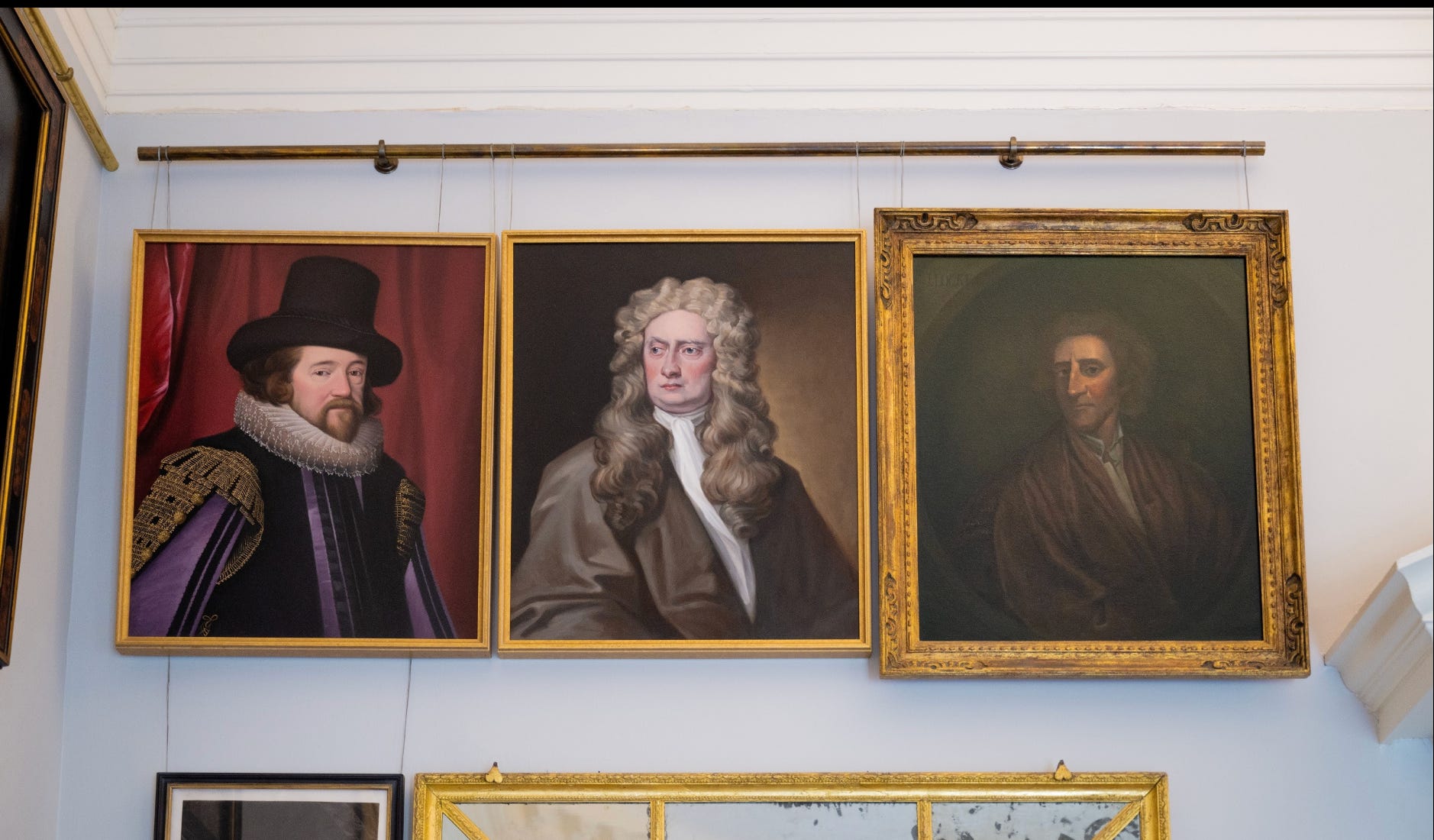
What drove him? Walking around his house (I took three of the tours) I looked at the portraits he had, the busts he commissioned. He had three in his main room: Bacon, Newton and Locke. Jefferson called it a “trinity of the three greatest men the world has ever produced.” All Englishmen. We’re living in civilisation that emerged from this: from Bacon’s inquiry, Newton’s reason and Locke’s liberty. Jefferson wanted to take these Enlightenment ideas and put them in a civic context - which meant rejecting the ‘this is a Christian country’ logic. Jefferson knew then, as the Jewish News knows now, that this is the sectarian’s cry: the language of the old world.
The warning on the shelf
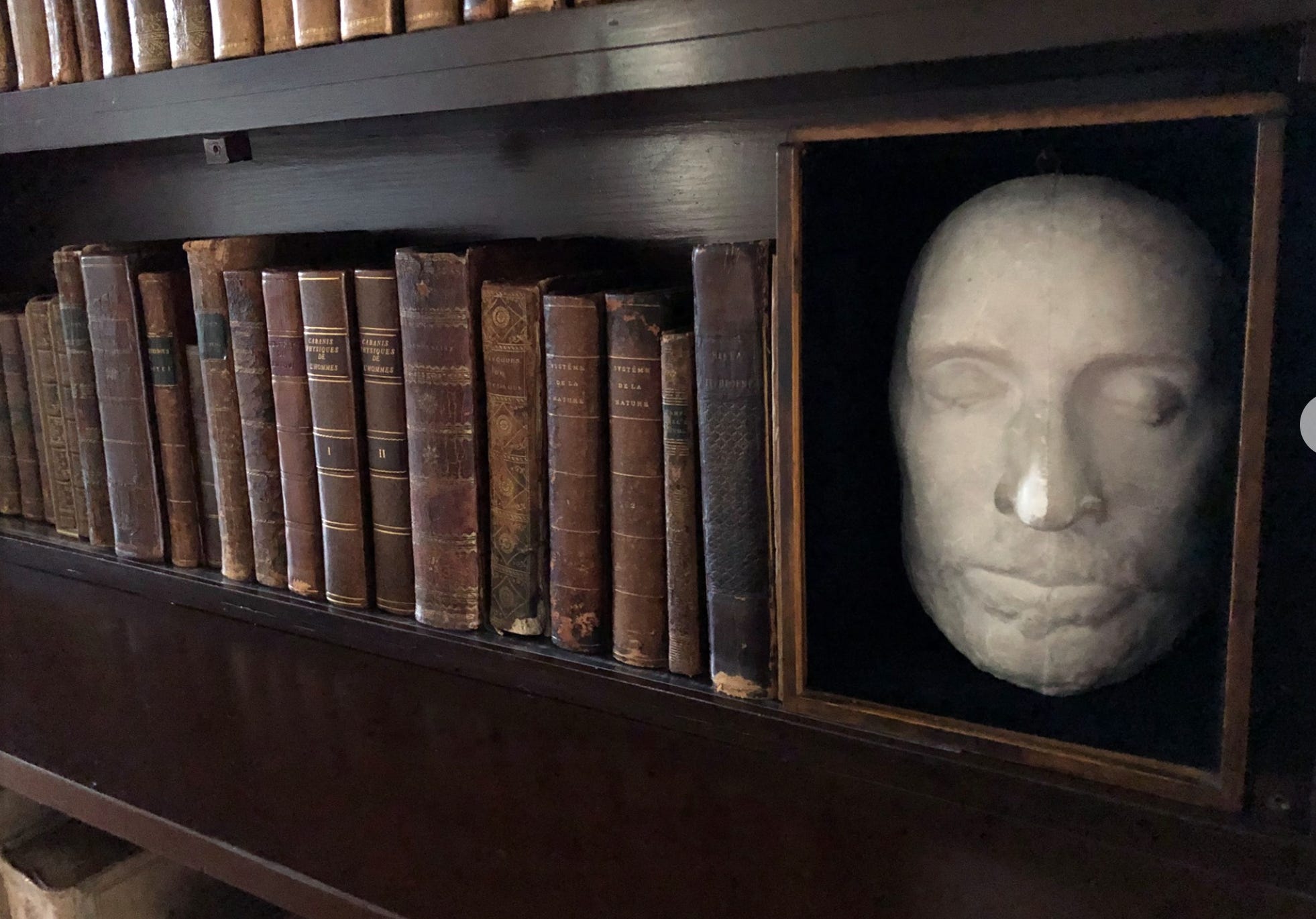
I also noticed he had Cromwell’s creepy death mask in his bookshelf (pictured below) I suspect as reminder of sectarian menace. Having lived through one revolution, Jefferson feared another. Cromwell was the warning: that the man who tears down the old order in the name of liberty can become the new tyrant faster than anyone expects. Especially if you throw religion into the mix. Cromwell’s mask was there, I suspect, as a memento mori for republics. Mixing religion and politics had cost Germany a quarter of its population in the Thirty Years War. (When editor of The Spectator I kept a framed version of The Scotsman as a momento mori: a reminder that even the greatest, most historic publications can collapse.)
So this, finally, is my answer to Guthrie Graves’s question. What are we defending? Not a rootless globalism, not a faith-free public square. Something more specific and more demanding: the idea of civic belonging, irrespective of creed. Jefferson’s insight was to see that religious pluralism would not be the enemy of a strong republic; it would be its foundation. As described by Locke’s Letter Concerning Toleration. The irony is that the ideas Jefferson was putting into constitutional concrete were British - born in the same island that is now being told, by Robinson’s speakers - and a few in parties - that it belongs to one faith alone.
Tribalism and sectarianism lie inside all of us: a primal switch, waiting to be flicked. This happened in Rwanda, Yugoslavia, Lebanon. I lived at the tail end of a sectarianism in Scotland that took generations to bury. The pile of crucifixes at Tommy Robinson’s march is sectarianism reaching from the grave.
And here’s the thing: I don’t look at Robinson’s march with contempt; I don’t see it as a Nuremberg. Gathering in the nation’s capital to express pride in your faith and country is a good thing: precisely what Muslims did when they invited Jews and others to join in the Trafalgar Square iftar at Eid. And if feel they’re in a culture where expressions of national pride is seen as racist: well, that’s worth protesting against. In quirky forms, perhaps. But if they want to come together carry crosses and say the Lord’s Prayer in a mass meeting: well, it’s a free country. This is why it’s so weird that a Tory MP wants public Muslim prayer banned. When Nigel Farage agreed, he conceded he’d have do this by banning all mass prayer. Presumably including the Our Father led on stage by Robinson’s manic street preachers yesterday.
Abridge freedoms for one minority and everyone suffers. Protect everyone’s freedoms in a British model and there need be no conflict. As we saw in the King’s coronation: a Hindu Prime Minister, a Buddhist Home Secretary, a Muslim mayor of London - and an electorate that didn’t care how any of them worshipped. It took the UK a while to get here, but we seem to have created the world’s most successful multi-faith democracy. The problem is that we’re too British to say so.
The King’s gambit
Many of the Robinson’s marchers want to say that they’re British, Christian and proud, as they are richly entitled to do. I’ve written about my issues with the ‘this is a Christian country’ phrase, which I see as exclusionary. But what if were repackaged to be inclusionary? What if ‘a Christian country’ is defined as having not just respect but love for the outsider, as mandated by countless Bible passages? Exactly this definition has been put forward by King Charles. I never tire of quoting it: this is the principle of our Carolingian age.
“The Sovereign has an additional duty: less formally recognised, but to be no less diligently discharged. It is the duty to protect the diversity of our country, including by protecting the space for Faith itself and its practise through the religions, cultures, traditions and beliefs to which our hearts and minds direct us as individuals. This diversity is not just enshrined in the laws of our country, it is enjoined by my own faith. As a member of the Church of England, my Christian beliefs have love at their very heart. By my most profound convictions, therefore – as well as by my position as Sovereign – I hold myself bound to respect those who follow other spiritual paths, as well as those who seek to live their lives in accordance with secular ideals.”
To see Britain’s integration success, look around you
If the UK government were not midway through meltdown it would point to a picture where immigration is fast being brought under control - and where Britain can lay claim to be the most successful melting pot in Europe. At times the Robinson rally looked like a Benetton advert: ebony and ivory, marching in perfect harmony (or, sometimes, not so perfect). The political interview that has got everyone talking today is Kemi Badenoch and Sky’s Trevor Phillips: a conversation that has sparked thousands of comments. None, as far as I can see, making a point about their skin colour.
The name for this isn’t tolerance or liberalism: it’s just Britishness. Not a rootless globalism, not a faith-free public square but the oldest idea in this story: that national belonging is distinct from creed. The nation we made - ours by evolution, America by revolution - is not a Protestant country or a Christian country but a free country, belonging to people of all colours, faiths and none. Pull this off, recognise Britishness as tool of cohesion - remember the principles that forged both modern Britain and America - and you have a formula for success.
The pace of demographic change in Britain and the attempts to revive sectarianism raise important questions. But as my trip to Monticello reminded me, we have even better answers.
I hope you find this of interest.
Religious tolerance came to America **originally** from the Dutch, not the Puritans.
The Island at the Center of the World, by Russell Shorto, is a history of the first Dutch colony in America. Based on 12,000 contemporaneous handwritten Dutch documents (legal, dairies, and so on) from the founding of that colony until its transfer by treaty to the English in 1664. Along with the Treaty for the Peace of Westphalia (1648).
The treaty that ended Dutch control of New Netherland did not itself spell out a broad rights charter, but the colony that passed to the English had been shaped by Dutch practices of religious toleration and relative openness, which stood in contrast to Puritan New England. In New Netherland, the Dutch allowed a diverse population to live under a policy often described as “liberty of conscience,” meaning people could practice other faiths privately even though the Dutch Reformed Church remained official.
Dutch tolerance in practice
Dutch policy in the colony was pragmatic: the authorities wanted trade, settlement, and stability, so they tolerated a mix of Protestants, Catholics, Jews, and others rather than forcing strict uniformity. That made New Netherland more open than many English colonies, and later British rule in New York initially continued some of that approach rather than imposing a hard religious settlement. The Dutch reputation for freer expression also extended beyond religion, since the Republic was known for comparatively broad freedom of thought and speech, especially for exiles and dissenters.
Contrast with New England
By contrast, Puritan New England aimed to build a godly society with stronger religious discipline and less room for dissent. In practice, Puritan colonies often treated disagreement as a threat to social order, and dissenters could be expelled or punished rather than accommodated. So when the English took over New Netherland and it became New York, the colony inherited a more pluralistic Dutch legacy than the more doctrinaire Puritan model found in New England
Wishful thinking cannot address real issues. Religious history has been bloody and only separation of religion from other aspects of governance and values enabled our coexistence. The new religion of Islam embodies all facets of life and as we see everywhere is very different from from previous belief in many ways, not least its insistence on conquest and enforced submission. Without any likely possibility or precedent for change, it cannot be argued that past British experience, tolerance or our values and laws can apply or build bridges with an incompatible absolutist and settled belief system, so leaving us all with a troublesome dilemma to say they least. Good will, blind or misguided optimism are unlikely to change the established required pattern of submission and deadly enforcement. Hope for any compromise or unprecedented change of great magnitude can only be misguided delusion after fifteen hundred years. Can you or others address this issue which is the cause of the widespread public anxiety you describe
.