Musk vs Gates
Which was the bigger killer: aid cuts, or lockdown theory?

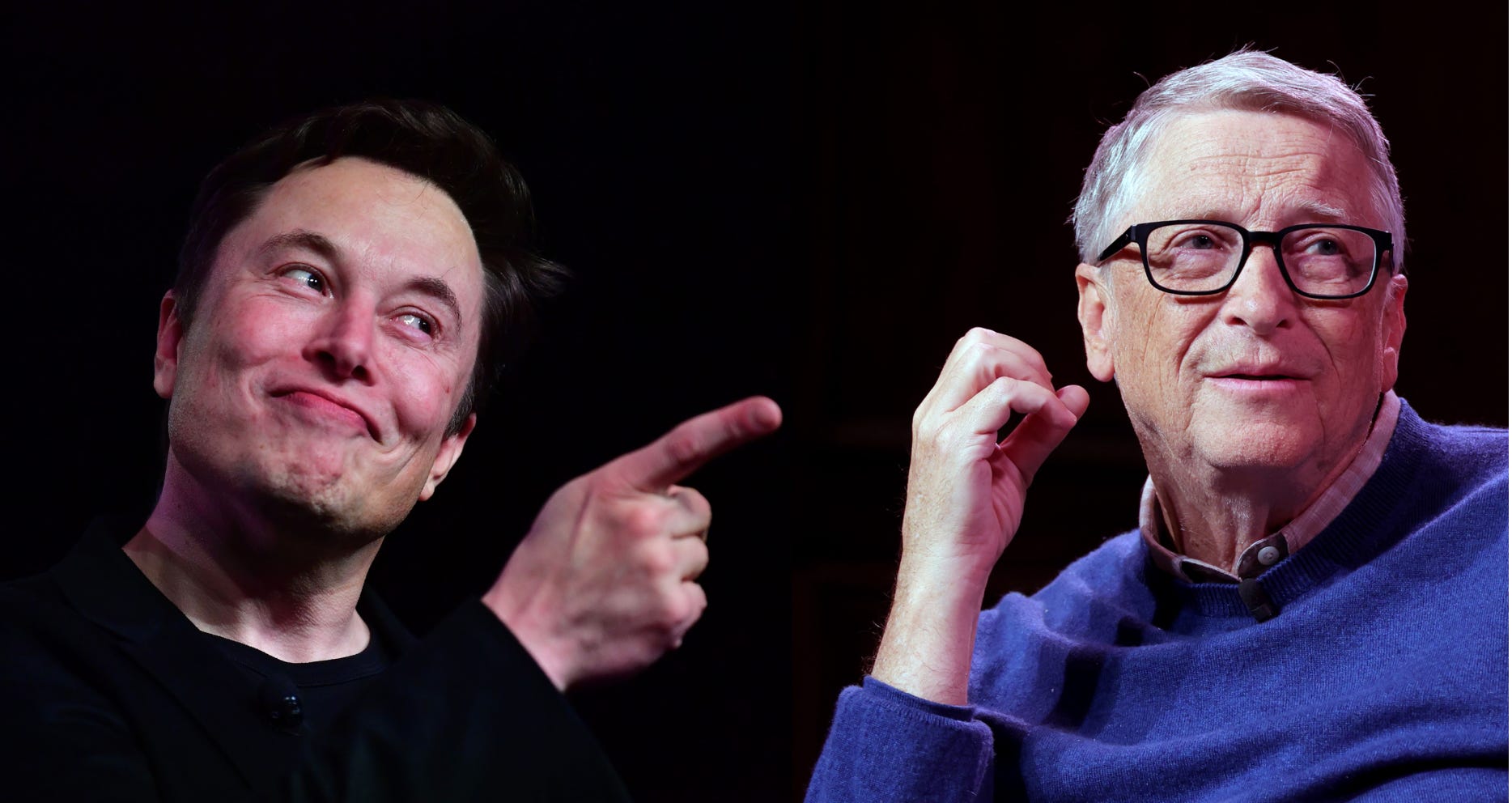
When Bill Gates heard that Elon Musk was a billionaire who wanted help humanity, he flew over to meet him. It soon emerged that these two cocksure pioneers had different views on how to save mankind. Musk explained how he’d save humanity by making it multi-planetary. Gates thought this “crazy” and proposed foreign aid; Musk replied that he thought such schemes were “bullshit”.
That was three years ago - and no love has been lost since. Gates, now doing a tour of interviews, has accused Musk of being responsible for the child death in the third world by DOGE-inspired cuts to US foreign aid. “The picture of the world's richest man killing the world's poorest children is not a pretty one,” he has told the FT.
Such language is obviously hyperbolic. Various studies have shown the problem with foreign aid, how it displaces cash governments would otherwise spend and how it may be creating more problems than it solves. To equate aid cuts to killing children is unworthy of Gates, one of the most effective philanthropists of our time. If you support a policy that you think indirectly kills kids, does that make you a kid-killer?
And if so, what does Bill Gates think of his position on lockdown? The last time I met him, I tried to persuade him that he was being silent over a global policy that would cost more third-world lives than any (other) decision ever likely to be taken in London or Washington. He came to lunch at The Spectator for a background chat. His team said he liked to hear challenging opinions. We did our best to oblige.
The needless decisions to shut down economies was always going to hurt the rich world, but the ramifications for the poor world were always going to be catastrophic. Yet not one of the many third-world charities made this point. The ISG Global institute in Barcelona has modelled 14m deaths worldwide as a result of US Aid cuts, 4.5m of them children. Stark figures, but it’s a classic example of how such agencies influence public debate. But where were was the ISG Global study about the collateral effects of lockdown? Like every other charity for the poor - at home or abroad - they fell silent at a time when serious debate could have saved the most lives.
The World Bank estimates that lockdowns meant about 70 million more people have ended up in extreme poverty in 2020 under a baseline scenario, with numbers potentially reaching 100 million under more severe conditions
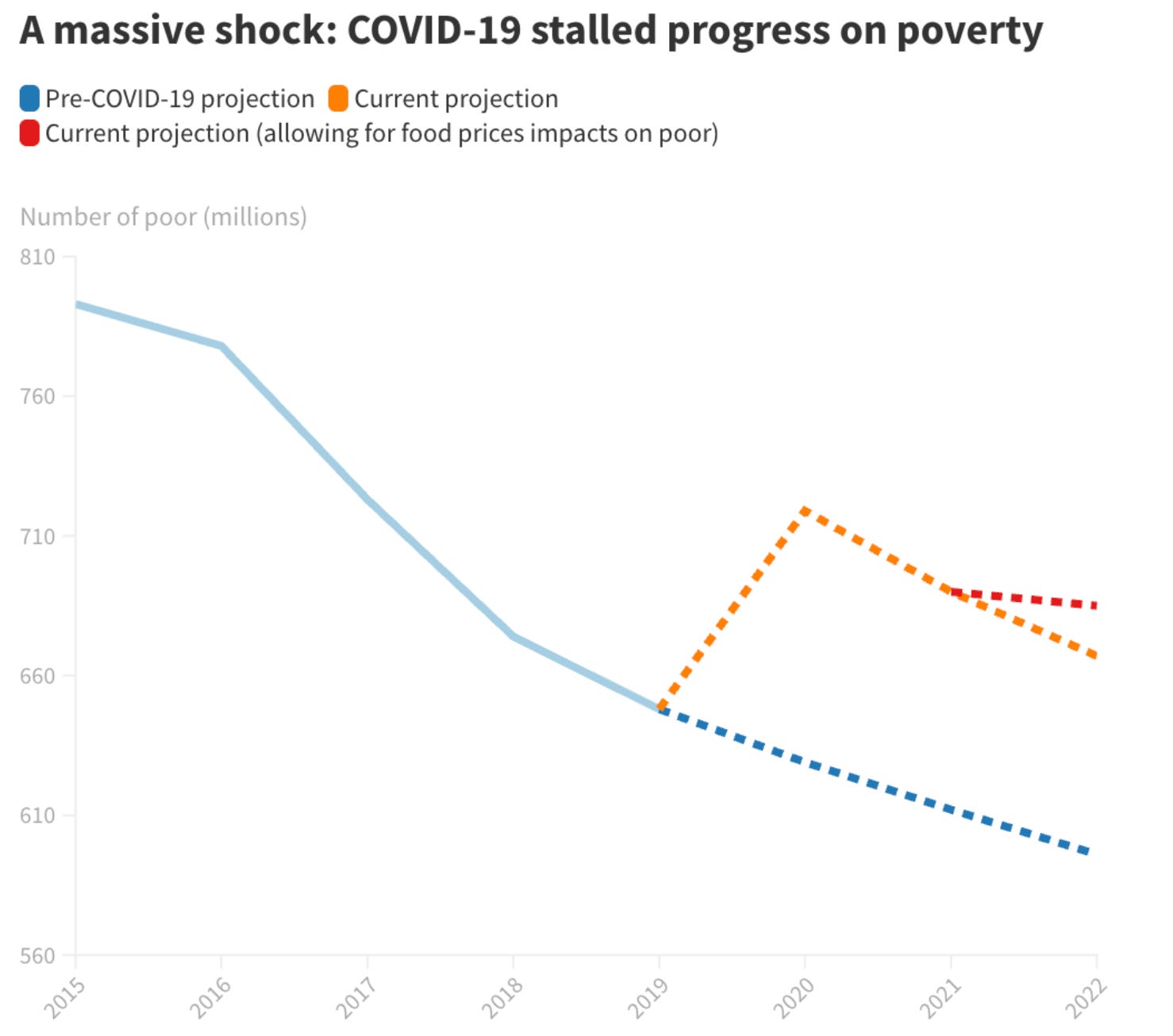
Another World Bank paper estimates that 1.8 child deaths for every adult death averted by lockdown policies. Even that paper was written before contemporary evidence showed that the original assumptions behind lockdown theory were flawed.
Gates acknowledged at the time that the “indirect effects” of lockdown could end up killing more people than the disease itself in developing countries. But he could, in my view, have done a lot more to challenge those lockdowns on this basis, rather than talk about it as an inevitable result that no one can do anything about. We now know that the fatality rate of Covid was about 0.15pc vs ~0.2pc for the 1968 Hong Kong Flu which killed a million worldwide but left a fraction of the collateral damage because we didn’t respond by closing down societies.
Lockdown theory, as fatefully advocated by ICL’s Neil Ferguson, was full of basic errors and incorrect assumptions that could have been taken apart at any time by an organisation as well-funded and respected as the Bill and Melinda Gates Foundation. They were independent of government; they don’t have to worry about pro-lockdown opinion polls, they could have applied the forensic modelling to show the full likely effect of policies on the countries where their charities operate.
Five years on from lockdown, I remain struck by the ongoing silence of the NGO activists over an avoidable reaction that, with proper scrutiny, could have been moderated and countless lives saved. But at the time, the perceived toxicity of that argument - and the stigma of being seen to side with nutters - closed down scientific inquiry. Jonathan Sumption, Ocford’s Carl Heneghan and Sunutra Gupta found no NGO counterparts.
I’m a huge believer in independent, brilliant people like Bill Gates using their wealth to do contribute to the national debate. Perhaps it’s because I have such high regard for his efforts that I feel so disappointed that did not engage that famous brain of his - or use his contrarian nature to subject lockdown theory to proper scrutiny.
In the end it was the leaked figures from a bank, JP Morgan, that exposed the futility of lockdowns during the Omicron debcale. That really stuck with me: anyone with proper resources could have ran that JP Morgan study and stopped yet another lockdown on a false premise. If Gates had ran such a study during the Delta wave, subjecting the Sage figures to scrutiny, how many lives could have been saved?
At The Spectator we did simple study comparing the SAGE scenarios for deaths with the actual. SAGE published Warwick uni modelling imagining if the new wave had 100pc, 50pc, 20pc or 10pc severity of the previous waves. There was no lockdown and actual deaths came in below every one of their plainly-ridiculous scenarios upon which the nation was very nearly locked down again.
The above chart was compiled by Michael Simmons, a young former civil servant who had recently joined The Spectator and simply compared SAGE’s published examples with actual, using datawrapper technology to present. Anyone could have done this. Yet no one else did this: for a simple reason. Those with proper research resources had defined civic responsibility as echoing rather than scrutinising the government’s public health message.
Where were the studies of the great universities? And where was the brainpower of Gates, given that we’re talking about a global error that would claim so many lives in the countries he her given the later years of his life serving?
Gates has huge power when he wants to speak. He accuses Elon Musk of killing kids and it makes worldwide news. If only he had tried to put a number on how many lives unduly harsh lockdown would needlessly take.
One of the most eloquent arguments against lockdown I’ve heard - thank you
Brilliantly argued article. Thank you!