Notes from Washington DC
On monuments, embassy parties and a revolution in American science

I was in Washington DC when war with Iran broke out. I’d come to talk welfare with scholars at the American Enterprise Institute, who are about a decade or two ahead of the UK debate. I’ll write about that later in the welfare section of this Substack, which is too niche for me to email out. But for now, some notes on the visit:-
People and power
For a political journalist, Washington is perhaps the best city in the world. It houses the world’s finest minds and greatest gossips: in this one-trade town almost everyone is in the business of information exchange in one way or another. Dinner at 6pm is normal, to make space for evening receptions - of which there are many. This suits my colleague Katy Balls, now Washington Editor of both the Times and Sunday Times, who let me tag along with her for an evening. She has an app that logs her various invites - dress code, other guests, locations - and strategises her evening. We even went to a party between courses of a dinner, which I had previously not known was possible. Wolfgang Puck was doing a tasting menu in Georgetown and food was coming slowly, so Katy suggested we nip to the British embassy. “We’ll make it back by dessert,” she said. The others at our table seemed to think this perfectly normal. In our short time at the embassy I met several people very useful to my column on defence and set up other meetings for later in the week. Christian Turner, our new ambassador, showed me around his office. None of this was prearranged. Then my phone buzzed and Katy recalled me to the cab, so we could get back to dessert in Georgetown. I would say it was chaotic, but it seemed more effective than order. I bailed at 12.30am: I was staying locally. She’d flown in that day from Florida. Her night was young; mine was over.
But this is shoe-leather journalism in action, and the digital world can’t replace it. One of the learnings of the intelligence failings over the Iraq war was that we had become too reliant on digital desk-work. It’s no substitute for good‑quality ‘humint’ (human intelligence) from talking to people in the room where it happens. The same risk runs in journalism. The reader is always best served by information gathered from journalists actually talking to people. Especially in Trumpworld, shaped by extraordinary personalities all rampaging around a relatively small town. Katy has the stamina to handle this while filing vast amounts of copy. When I was her boss at The Spectator, I marvelled at her ability to work at such a pace. I’m now her colleague at The Times and still have no idea how she does it.
Washington’s monuments
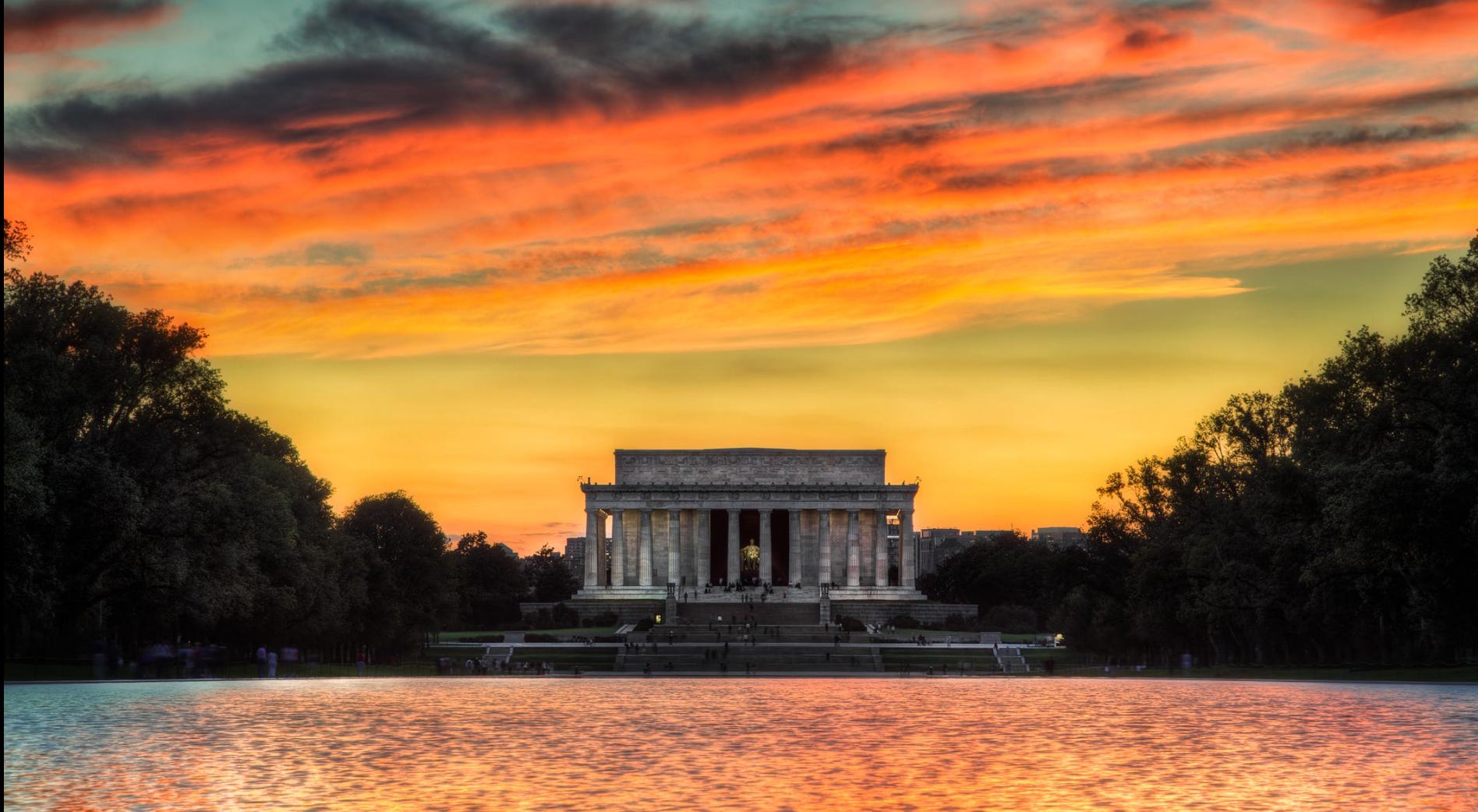
Walking around DC in daytime is more my thing. No one ever talks about the beauty of America, or its capital. What struck me this time is the classical grandeur of its buildings: the way they are almost trying to invoke the Roman Republic in part as a model to emulate - and in part as a warning to heed. Sometimes, America seems more influenced by the classical world than Britain. It has a city - Cincinnati - named after Cincinnatus, the Roman general who exercised emergency power to save the republic then relinquished his dictatorial powers and went back to his farm. The Jefferson Memorial is modelled on a Greek temple, the Lincoln Memorial (above) on the Pantheon. Capitol Hill is named after one of the seven hills of Rome. It’s as if Washington’s architects intended its building to remind citizens of the ideals upon which the Republic was founded - and ask if they still live up to them. That’s why I’ve always seen the constant rancour in American politics as more a sign of health than decay.
The Bhattacharya revolution
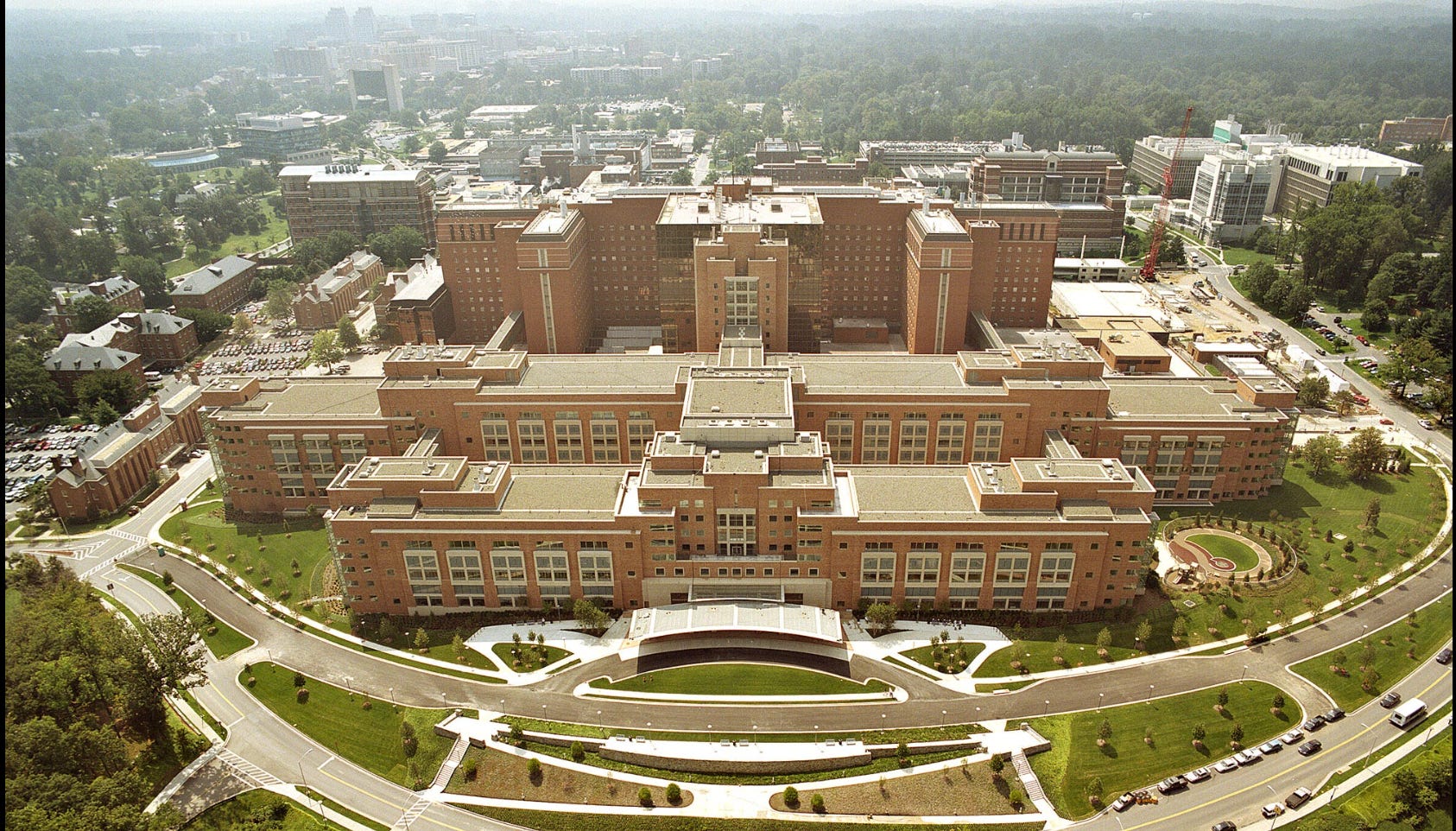
During Covid I commissioned a Stanford academic, Jay Bhattacharya, to write a piece for The Spectator scrutinising lockdown policy. We have kept in touch ever since. He was one of the few people pointing out the unscientific nature of this dogma and, for this, faced the wrath of the medical establishment. He didn’t back down and went on to sign the Great Barrington Declaration. Rather than ask if these professors might have had a point Francis Collins, who ran the all-powerful US National Institutes of Health, ordered a “quick and devastating takedown” of the dissidents. We know this as his email came to light months later, exposing how tribalism and groupthink had overpowered science. With fateful consequences.
Jay has been appointed by Trump to run the NIH and he’s on a mission to depoliticise science. It was quite something to see this former hoodie-wearing academic now running the vast NIH campus. He sees lockdown debate (or lack thereof) as the culmination of years of decay, in which politics and clannishness suborned science. He wants to oversee a scientific restoration, a return of rigour - with replicability reinstalled as the ultimate test of truth. His mission (he calls it the Second Scientific Revolution) is about changing the way scientific discussions take place. Can one man reverse a culture? Not normally. But if this man runs the most powerful medical research unit in the world, then: maybe.
The Politics of Pushkin
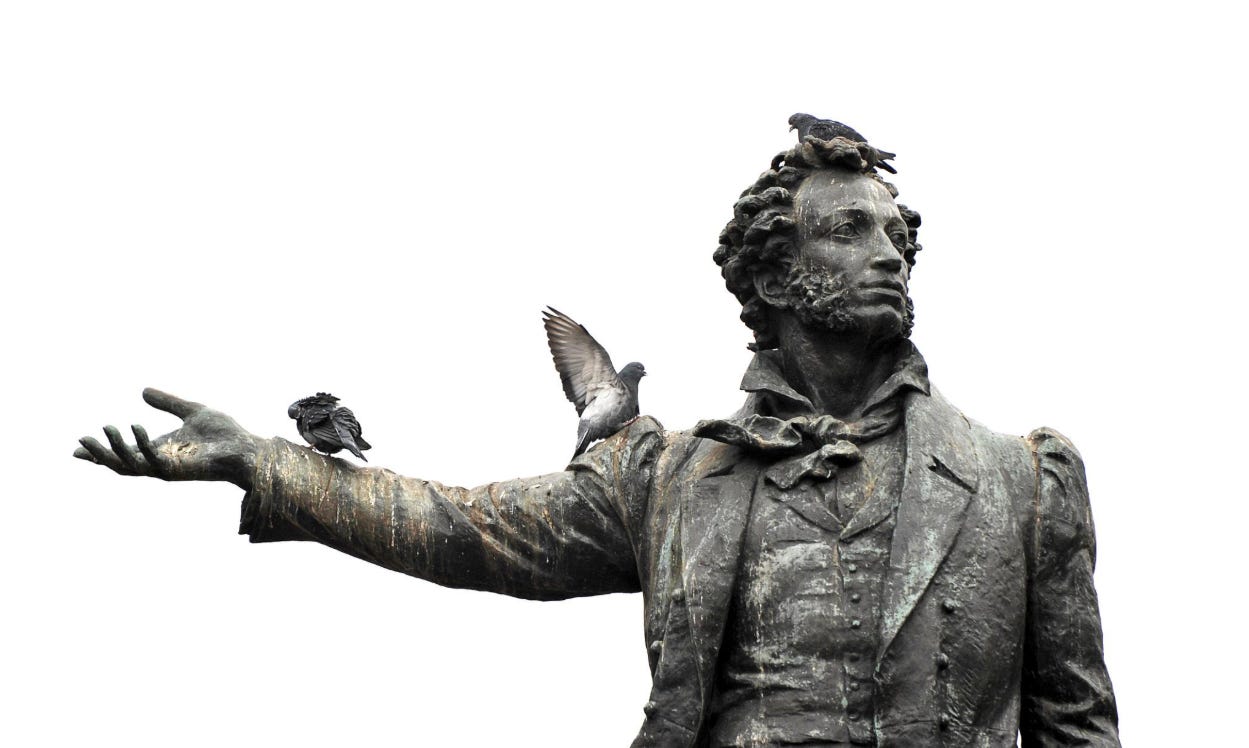
In George Washington University campus I passed a monument to Pushkin (above) donated by Russia which seems to use him as China does pandas: a politically uncontroversial gift. But, now, anything from Russia is seen as toxic and his statue in his old home of Odessa is now boarded up as if he was Jimmy Savile. Anti-Putinism is morphing into anti-Russian - something explored in a superb new book, The Good Russian, by Jana Bakunina, that I have just finished reading. “Tchaikovsky Lane will become Theatre Lane,” ran a July 2024 edict from Kyiv. “Pushkin Street will become Italian Street.” Bakunina, a Russian, writes about the oddness of punishing Pushkin as if he was Putin. But she understands the anger. “I don’t have the heart to list the atrocities committed by Russian forces in Ukraine since 2014,” she writes. “But if I were from a country invaded by Russia, I’d hate me too.”
The Americans went through their statue-toppling phase and Pushkin seems to have survived. But this is a city of statues, a place where history seems to be argued with stone. A town designed not just to house power but to narrate it. There are no Trump statues but massive Kim Jong-il style banners of him make up for it. Every temple facade, every Smithsonian museum, every vista down the Mall seems designed to ask the same question the founders obsessed over: how does a republic endure? The parties, the gossip, the monuments, the arguments about science and war and statues are all, in their different ways, part of the same ancient conversation about power and its limits. That’s why Washington’s journalists have such incredible raw material: perhaps now more than ever. One of the few regrets of my charmed life is that I never had the chance to live and work out there when I had the youth and the stamina. Two of my Spectator colleagues, Katy and Kate Andrews (now at WaPo) now both do - and I envy them. I suspect that there’s no better job in journalism, and no better time to do it.
Agree about America in some ways being more devoted to the classical world than the UK. I have degree certificates from Oxford and McGill universities (the latter is in Montreal). One is English and one is in Latin. It is not the way round you would have expected. Quite comical to see Montreal rendered in Latin. (I do realise Montreal is in Canada but the point remains.)
So Jay Bhattacharya had been appointed by Trump the climate change denier, vaccine sceptic etc etc to 'oversee a scientific restoration, a return of rigour'. I almost fell out of my armchair reading this sychophantic nonsense. I like Fraser's writing but the White House must have threatened to revoke his visa if he wrote anything vaguely critical about this truly shocking US Government.