
A few weeks ago, the OBR released figures saying that Keir Starmer would never get immigration back under control: that it would never fall under 220,000 for the rest of this parliament. Nigel Farage’s general election manifesto writes itself. Here is its ghost of Christmas Future:-
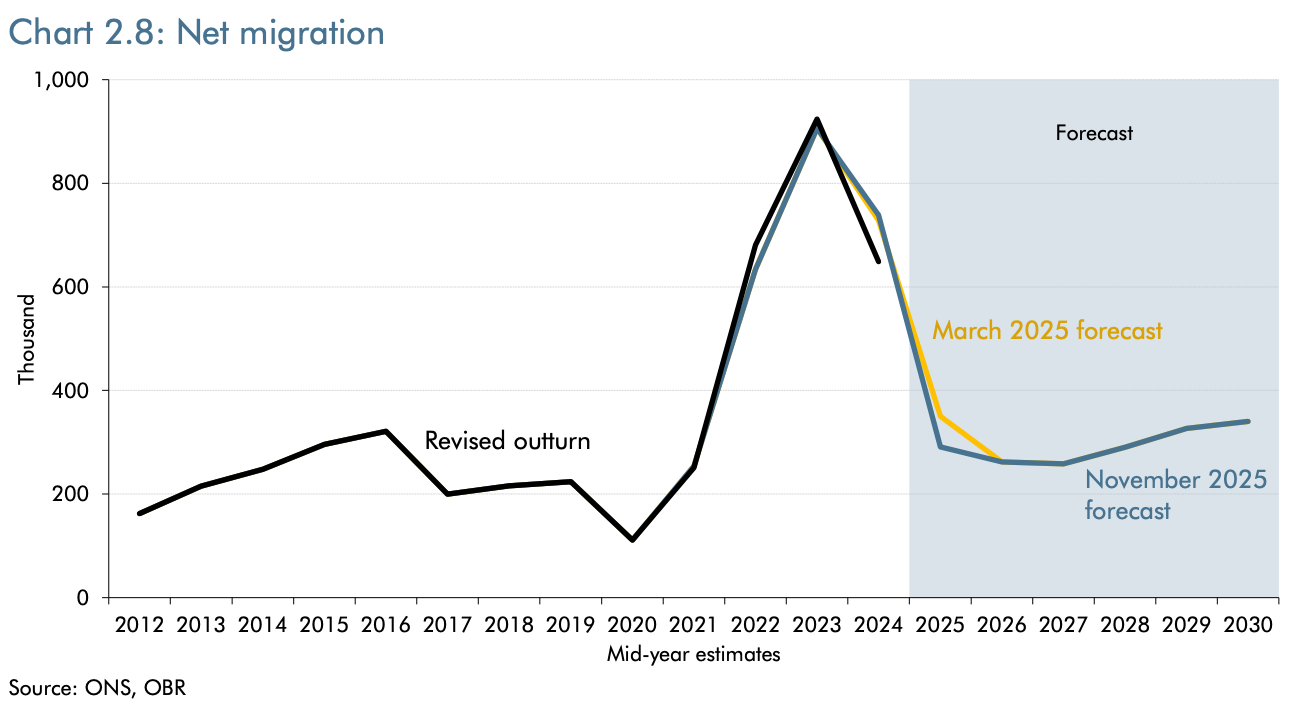
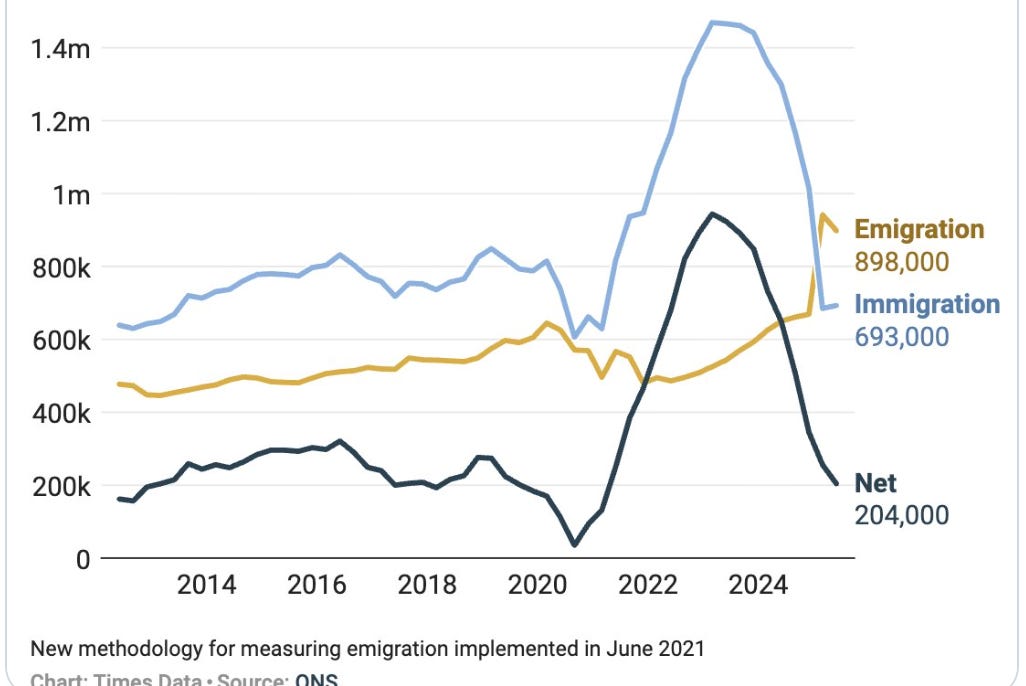
But a few weeks later, the actual figures were released. The big black line at the top, actual net migration, fell to 204,000 for the year to Jun25, far lower than anyone had expected. It will be lower still by now.
Just as no one saw the migration surge coming when the Tories loosened the post-Brexit controls, no one saw migration collapsing when those controls were later tightened. I wrote about this for The Times last weekend and discussed it with Kate McCann on Times Radio this morning.
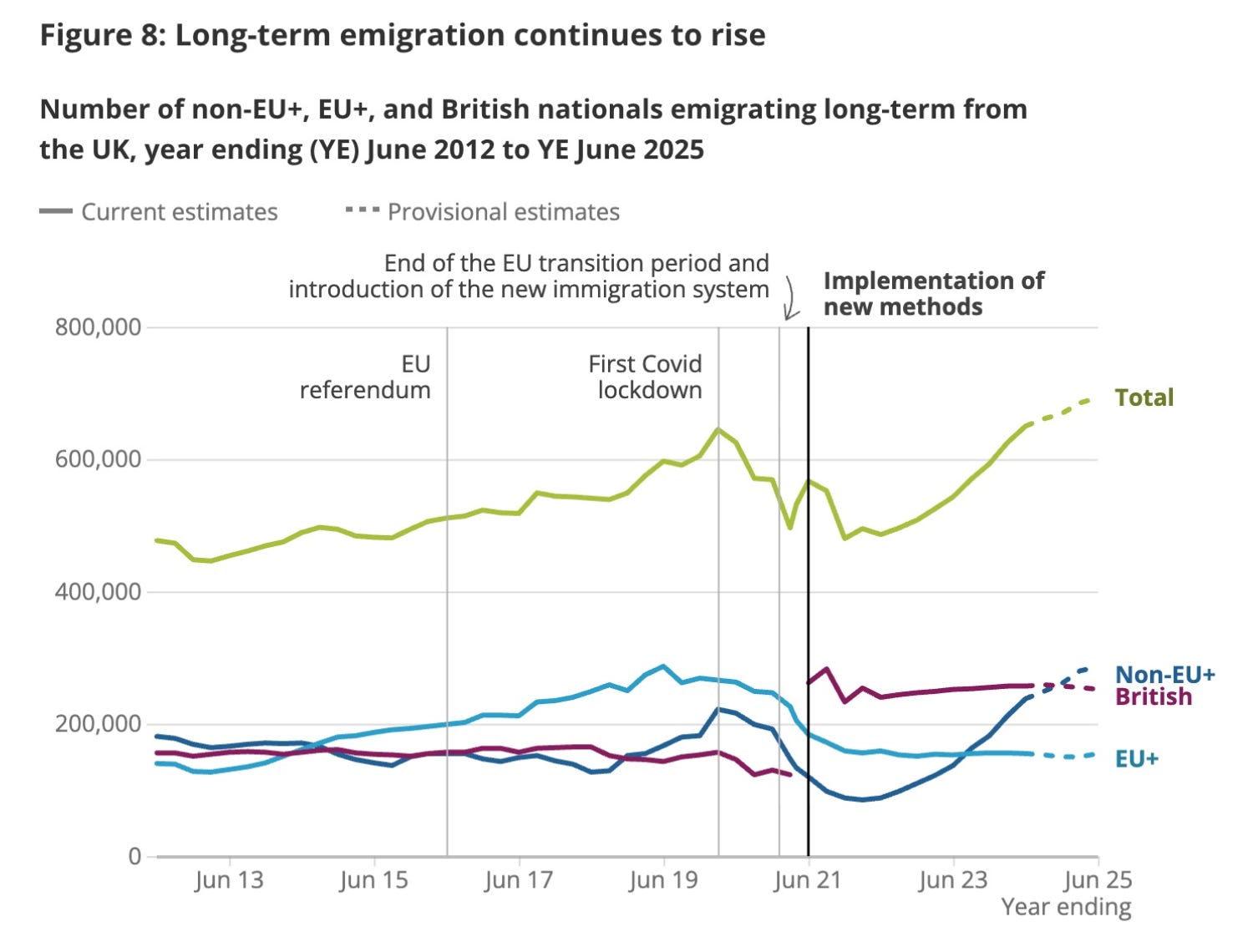
There are two big changes. One is remigration - immigrants leaving the UK for good - which has surged to about 400,000 a year. On top of that we have ~250,000 British citizens leaving: cue panicked headlines about brain drain. But I suspect a great many of these are, say, Poles with a UK passport returning to their now-booming homeland. Warsaw is actively poaching them, offering far lower taxes than they pay here.
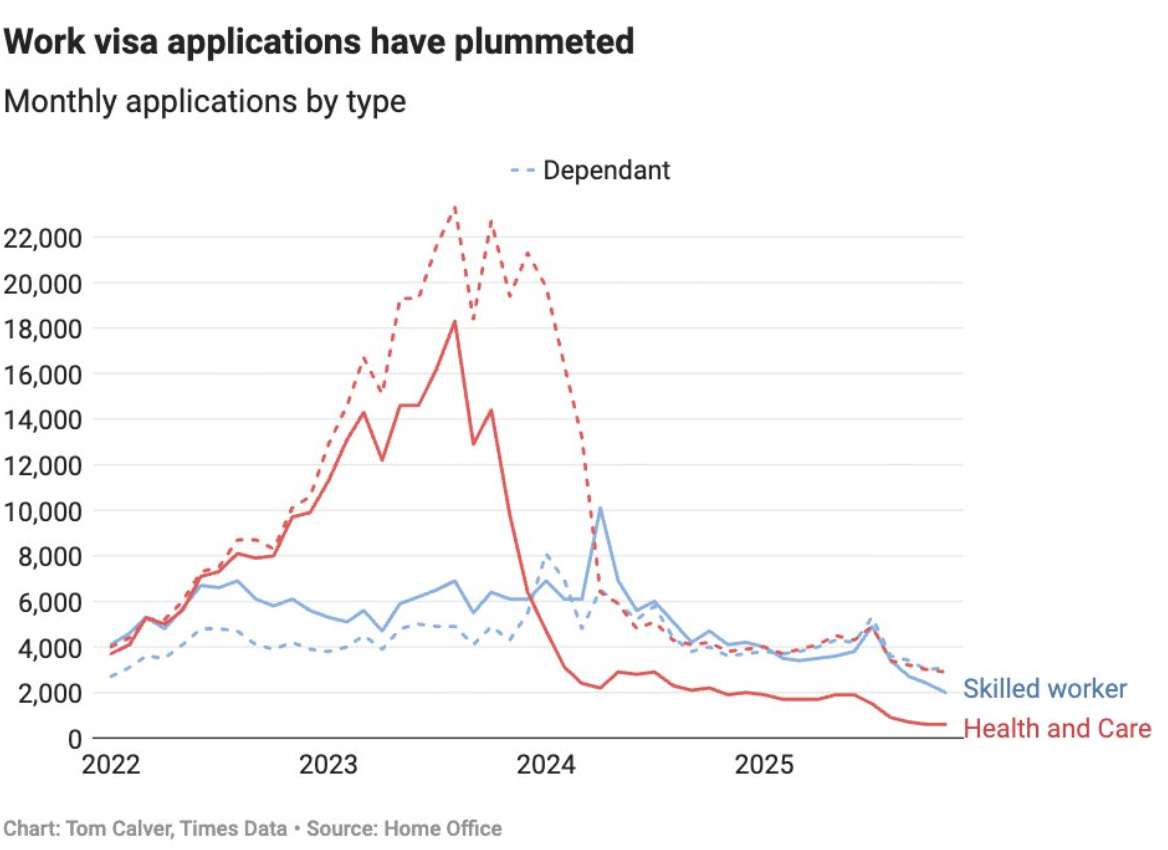
The next big change is the collapse in visas being issued, using Brexit powers. My colleague Tom Calver has graphed them up…
Take the new visa information and project it, as James Bowes of Warwick University has done, and he sees net migration hitting ~50k in the year to Jun26. Which implies it’s already in the tens-of-thousands territory that the Tories promised for years but never actually delivered. And then it hits net zero, turning negative for full-year 2026. Net zero was what said Reform would deliver in office.
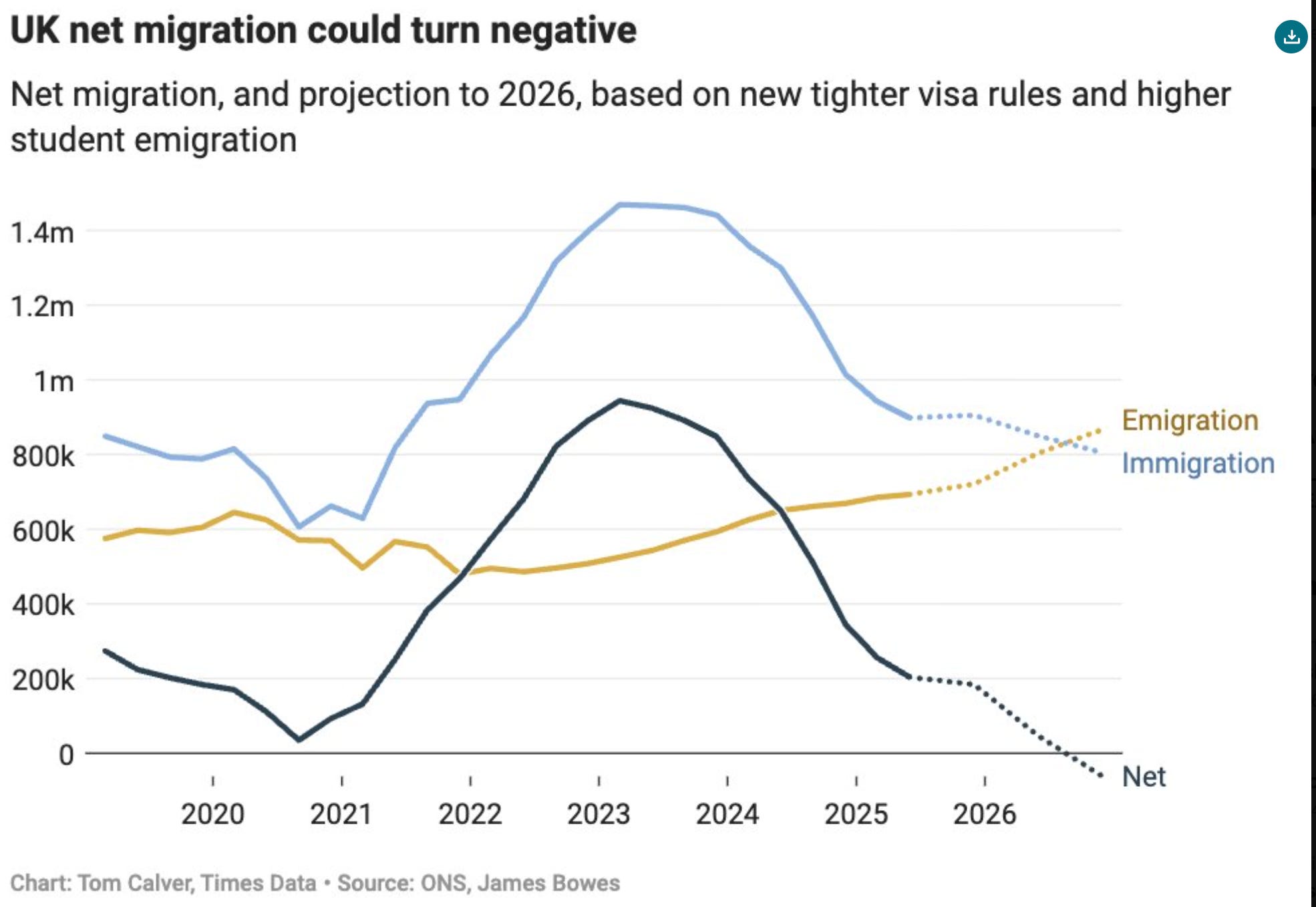
Large uncertainty surrounds these figures. Migration is very hard to forecast with monstrous error margins (just ask the OBR). But the actual figure of 204k reported by the ONS means it’s already below what anyone expected for this parliament and various tightening measures have yet to hit.
Can Starmer take this open goal?
If these projections prove even halfway right, a big opportunity awaits. Starmer will soon be able to say he has delivered on the oft-repeated, never-kept Tory promise to take migration to the “tens of thousands”. How can Farage talk about “uncontrolled migration” if the net figure is already the lowest since the mid-1990s? What will there be left for Reform to say come the general election?
But other problems will appear. The Treasury is counting on 262,000 net arrivals in the year to this June - a figure supplied by that same OBR. If this is utterly wrong, as now seems plausible, expect panic about tax revenue. As I was saying on Times Radio, David Lammy has already been lobbying to let prisons keep hiring guards from Nigeria - they make up a third of all applicants. Migration is always used to cover up failure. Care homes will insist they’ll go bust without foreign staff. This is what happened after Brexit and the Tories buckled - with fateful consequences.
Starmer should hold his nerve. Unemployment is soaring: how can he justify importing more unskilled labour? Businesses can be told that the old tap of unlimited migration has now been turned off and they’d best adjust. Perhaps train their own workers, or look to the 6.5 million Brits currently on out-of-work benefits. A worker shortage, used properly, could reverse the rise in unemployment and transform welfare reform from an optional extra to an urgent economic imperative.
Prepare for a new argument: ‘we’re swapping good for bad’
When a movement builds around a grievance that is addressed, they usually switch to a new grievance. High net migration pressures public services, housing etc. If that vanishes, then the criticism will switch to the nature of the arrivals. Look at all of the decent Brits leaving! And we’re getting boat people in return! Rupert Lowe, kicked out of Reform for his views, has championed this theme.
Small boats will remain a very visible problem until the legal mess is fixed, with data out almost every day. A drumbeat of border-control failure. But who is leaving? The ONS data below suggests British emigration is stable. It was under-reported before, but there is no suggestion of a surge. The surge is amongst the non-EU migrants - so the emigration spike looks like the unwinding of the BorisWave. Details below…
The real picture is hard to see through the fog of ever-changing data. But if the figures don’t fall as fast as Warwick analysis suggests, Starmer can tighten the rules further - it’s all in his control. Controlling migration isn’t so much his best chance of survival: it’s his only chance. But he has, here, a rare example of a policy that works. Much depends on whether he is able to tell it.


